
Natural stress remedies: what the science confirms
Herbs, breathing, habits: how well do natural remedies for stress really work? A factual overview of what studies say, including their limits and precautions.
Key takeaways
- There is no universal miracle remedy: stress is a complex physiological response that varies between individuals and contexts.
- Valerian, passionflower and lemon balm are widely used, but the evidence remains limited, and they do not replace care when an anxiety disorder is present.
- Slow breathing increases heart rate variability, an indicator of parasympathetic nervous system activity, from a single session[2].
- The evidence is uneven: encouraging for breathing[1], more fragile for herbs[3][5], which call for medical or pharmaceutical advice.
- Breathing, physical activity and sleep remain the first levers to try, because they carry little risk.
Why there is no miracle remedy for stress
The word "miracle" is misleading. Stress is not a disease to be cured: it is a normal physiological response, coordinated by two distinct systems. On one side, the hypothalamic-pituitary-adrenal axis controls the secretion of cortisol. On the other, the sympathetic nervous system releases adrenaline, speeds up the heart rate and prepares the body to react.
This activation of the sympathetic nervous system is useful when facing a one-off danger. The problem arises when it goes on for too long.
Two forms of stress with different mechanisms can be distinguished:
- Acute stress: a one-off reaction to a specific event (exam, conflict, medical procedure). The body quickly returns to balance.
- Chronic stress: prolonged activation that depletes reserves, disrupts sleep and promotes anxiety. It requires a different approach.
This individual variability explains why no single solution works for everyone. What soothes one person may have no effect on another. The rest of this article presents the approaches with measurable clinical evidence, specifying which type of stress they apply to.
Anti-stress herbs: clinical evidence and limits
Four herbs come up often: valerian, passionflower, lemon balm and lavender. Their levels of evidence are uneven, and this article gives no dosage: ask a doctor or pharmacist for advice, particularly in case of pregnancy, breastfeeding, in children or alongside ongoing treatment.
Valerian: a possible effect on sleep
Valerian (Valeriana officinalis) is mainly studied for sleep. A review of 16 trials and 1,093 patients suggests it may improve sleep quality, but most of the studies have major methodological problems[3].
Passionflower: traditional use, little evidence
Passionflower (Passiflora incarnata) is traditionally used for restlessness and mild anxiety. The available studies remain small: they do not allow firm conclusions.
Lemon balm and lavender
Lemon balm (Melissa officinalis) is traditionally used when anxiety comes with digestive problems: cramps, bloating.
Lavender is mainly used in aromatherapy. A meta-analysis of 20 studies found less anxiety before surgery in patients who received its essential oil[4]; the size of the effect, which is very heterogeneous, should be interpreted with caution.
Good to know: Dosages vary depending on the dosage form (herbal tea, capsule, tincture, dry extract). Clinical studies often use standardized extracts, which are hard to reproduce with homemade herbal teas. No herb replaces medical treatment in the case of a diagnosed anxiety disorder.
Essential oils and aromatherapy: use and precautions
Two explanations are put forward for essential oils: the action of their chemical components, such as linalool, and the stimulation of the sense of smell, linked to the brain regions that process emotions.
The oils most often cited for stress management are true lavender (Lavandula angustifolia) and bitter orange petitgrain (Citrus aurantium).
Methods of use:
- Diffusion into the air: short, in a ventilated room
- Application to the skin: always diluted in a vegetable oil, never pure on the skin, on a professional's advice
- Dry inhalation: a few drops on a tissue, to be breathed in slowly
Strict contraindications:
- Pregnant or breastfeeding women
- Children, unless medically advised
- People with epilepsy: several oils are neurotoxic at high doses
- People with asthma: diffusion can trigger an attack
- Pure use on the skin: skin toxicity and risk of burns
An essential oil is not harmless. Its concentration of active molecules is incomparable with that of a herbal tea. Respecting doses and precautions for use is not a formality.
Adaptogenic herbs: resistance to chronic stress
Adaptogenic herbs form a category of their own. The term refers to plants supposed to increase the body's resistance to stressors. They do not calm an acute spike of anxiety: they are used as a course of treatment, over time, with evidence that is still limited.
Two plants dominate this category.
Rhodiola (Rhodiola rosea): native to the cold regions of Europe and Asia, it is thought to act on the hypothalamic-pituitary-adrenal axis (HPA axis), which regulates cortisol production. One review presents it as an option for stress-related symptoms[5], but trials remain few.
Ginseng (Panax ginseng): its ginsenosides are also thought to modulate the HPA axis and the inflammatory response to stress. Studies are often short and the extracts heterogeneous.
In both cases, the length of the course is decisive. These herbs do not produce an immediate effect: several weeks of regular use are needed to see a benefit. They are unsuited to one-off acute stress, and their value clearly lies in supporting established chronic stress.
Consult a healthcare professional before starting a course, particularly if you are already taking medication.

C2Care, a leader in immersive technologies for mental health
Create your free account to explore over 250 virtual reality exposure situations and subscribe directly online.
Breathing techniques: immediate effects on the nervous system
Breathing is one of the few voluntary levers on the autonomic nervous system: by consciously changing your breathing rhythm, you can influence the balance between the sympathetic nervous system (activation) and the parasympathetic system (recovery).
Two techniques are particularly well documented.
Cardiac coherence rests on a simple rhythm: 5 seconds of inhalation, 5 seconds of exhalation, repeated for 5 minutes. It relies on slow breathing, whose effect on heart rate variability is confirmed by a meta-analysis of 223 studies, during the session, just after it and after several sessions[2]. Another meta-analysis finds a small to moderate effect of breathwork on stress, while calling for caution regarding the enthusiasm for these methods[1].
Box breathing follows a pattern of four equal phases: 4 seconds of inhalation, 4 seconds holding with full lungs, 4 seconds of exhalation, 4 seconds holding with empty lungs. Used notably in acute stress management protocols, it requires no equipment.
Practitioners can also offer relaxation sessions in virtual reality: C2Care includes this type of environment in its platform, alongside exposure. It is not a remedy: it is a tool used as part of ongoing follow-up.
Diet, physical activity and sleep: the basics
Before looking for a herb, check these three levers. Regular physical activity, even moderate such as brisk walking, is among the most common pieces of advice. Regular sleep schedules and fewer screens in the evening help you recover. As for diet, aim for varied meals and limit caffeine and alcohol, which can disrupt sleep. No food has a demonstrated anti-stress effect on its own.
Herbal tea, capsule, essential oil: which form to choose?
Herbal tea is simple, but its concentration varies. A dry extract capsule offers a more consistent dosage. Essential oil is highly concentrated and requires the most precautions. Check for interactions with your pharmacist, especially if you are already taking medication.
What to remember about natural remedies for stress
There is no miracle cure. The evidence varies widely from one approach to another.
Herbs (valerian, passionflower, lemon balm) are mainly used for mild anxiety, with limited evidence, and are not suitable for severe anxiety disorders. Essential oils require respecting their contraindications. Adaptogenic plants such as rhodiola are proposed for chronic stress, based on trials that are still few in number. Breathing techniques have a measurable effect on heart rate variability[2] and a small to moderate effect on stress[1].
Start with what carries the fewest risks: breathing, physical activity, sleep.
If symptoms persist or are disabling, consulting a healthcare professional remains essential. Natural remedies are a complement, never a substitute for appropriate care.
C2Care, a leader in immersive technologies for mental health
Create your free account to explore over 250 virtual reality exposure situations and subscribe directly online.
Frequently asked questions about natural remedies for stress
What is the most effective herb for stress?
No herb is universally the most effective. Valerian is the most studied for sleep, based on trials of often limited quality[3]. Lemon balm is particularly indicated if stress causes digestive spasms. Effectiveness varies depending on the individual, the form used and the type of stress (acute or chronic).
Are essential oils dangerous for managing stress?
Essential oils are not harmless. They can be toxic when used undiluted or in certain populations: pregnant women, children under 6, and people with epilepsy or asthma. Always dilute before applying to the skin and respect the contraindications. When diffusing, favor short durations in a well-ventilated room.
How long does it take to feel the effects of an anti-stress herb?
Effects vary depending on the herb and its form. Slow breathing exercises change heart rate variability from the first session[2]. For herbs, there is no established timeframe. Adaptogenic plants such as rhodiola or ginseng require several weeks of continuous use.
Can several anti-stress herbs be combined?
Some combinations are common, such as valerian and passionflower, or lemon balm and lavender. Avoid multiplying herbs without professional advice, especially if you are already taking medication. Drug interactions are possible, particularly with anxiolytics, sedatives or anticoagulants. A pharmacist or doctor can guide you toward the most suitable combinations.
Can natural remedies replace medical treatment for anxiety?
No. Natural remedies are not a treatment for anxiety. In the case of a diagnosed anxiety disorder (panic disorder, generalized anxiety, disabling phobia), medical treatment and psychological follow-up are essential. Herbs can be a useful complement, never a substitute for appropriate professional care.
Does magnesium really help against stress?
Stress increases the urinary elimination of magnesium, which itself regulates the stress response: a vicious circle often described. A sufficient intake through food (nuts and seeds, green vegetables, whole grains) helps maintain this regulation. Whether supplementation is worthwhile should be discussed with a doctor, especially in the case of a confirmed deficiency.
Is physical activity really effective against stress?
Regular physical exercise is among the most common pieces of advice for managing stress better. A moderate-intensity activity (brisk walking, swimming, dynamic yoga) is a good starting point. Regularity matters more than the length of each session.
What is the difference between herbal tea and standardized extract for anti-stress herbs?
Clinical studies use standardized extracts, whose concentration of active ingredients is controlled. A homemade herbal tea offers a variable concentration depending on the quality of the plant, the infusion time and the water used. Dry extract capsules guarantee a more reproducible dosage. For targeted therapeutic use, standardized forms are preferable to herbal teas.
References
- scientific-study
Effect of breathwork on stress and mental health: A meta-analysis of randomised-controlled trials
Scientific Reports
2023View - scientific-study
Effects of voluntary slow breathing on heart rate and heart rate variability: A systematic review and a meta-analysis
Neuroscience & Biobehavioral Reviews
2022View - scientific-study
Valerian for sleep: a systematic review and meta-analysis
The American Journal of Medicine
2006View - scientific-study
Effect of Lavender Oil on Preoperative Anxiety: Systematic Review and Meta-analysis
Journal of PeriAnesthesia Nursing
2024View - scientific-study
Stress management and the role of Rhodiola rosea: a review
International Journal of Psychiatry in Clinical Practice
2018View
Author
C2Care
Related articles
"I cured my anxiety": myths, realities and what really helps
Can anxiety really be cured, and how long does it take? What studies say, the preconceived ideas to let go of, and landmarks to move forward without false promises.

Exam stress: how to manage it effectively
Nearly one in two medical students suffers from test anxiety. The causes, the symptoms to look out for and techniques to manage this stress better, without avoidance or routine medication.
Sophrology
Reducing your anxiety by being completely in control of your body and your thoughts is the very principle of sophrology. This therapeutic technique is based on various methods of relaxation, breathing, and imagery which bring rapid and long-term relief. Sophrology has also proven itself when used accompanied by virtual reality.

Virtual nature, real well-being
Regular exposure to nature is an integral component of good mental health. The sun, greenery, and wind are all elements that contribute to good psychological balance and a better quality of life. However, certain unforeseen events in life sometimes prevent us from fully enjoying these benefits. Highlighting an alternative solution to allow as many people as possible to enjoy nature: virtual nature.
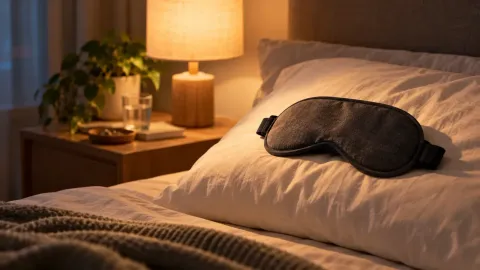
Hypnosis mask: how it works, effectiveness and precautions before buying
The hypnosis mask promises easier sleep and less stress. How it works, studies on hypnosis, precautions, prices and alternatives: what you need to know before buying.
Jacobson's progressive muscle relaxation: method, steps and benefits
Jacobson's relaxation, or progressive muscle relaxation, alternates contraction and release of the muscles. This guide details the method, its four phases, what research says about it and its precautions, for practitioners and their patients.