
"I cured my anxiety": myths, realities and what really helps
Can anxiety really be cured, and how long does it take? What studies say, the preconceived ideas to let go of, and landmarks to move forward without false promises.

Key takeaways
- A testimonial can give you hope, but it does not tell you what will work for you.
- Being cured does not mean never feeling anxious again: anxiety is a normal emotion. The goal is for it to stop running your life.
- On average, about 51% of adults treated with CBT for an anxiety disorder reach remission[2]. That is encouraging, and it also leaves room for improvement.
- There is no standard timeframe: be wary of promises of results within a few days.
- A relapse does not erase your progress: plan for it rather than dread it.
- Exposure, including in virtual reality with a practitioner, helps you take back what anxiety made you give up[3][8].
"I cured my anxiety": what does being cured really mean?
Videos, podcasts, articles: stories from people who say they have cured their anxiety are everywhere. They feel good to hear when you are struggling. They can also make you feel guilty: if that person got through it with a simple method, why not you?
Let us start with a distinction. Anxiety is a normal emotion, useful when facing a difficulty. No one gets rid of it, and it would not be desirable to. An anxiety disorder is something else: an excessive fear or worry that lasts and gets in the way of your daily life. According to figures from the French health authority (HAS) cited by Inserm, a French health research institute, 15% of adults in France aged 18 to 65 have severe anxiety disorders in a given year, and 21% over their lifetime[1]. These disorders are therefore common, and you have nothing in particular to blame yourself for.
The word "cured" can then cover several realities:
- feeling better: fewer symptoms, less avoidance;
- being in remission: no longer meeting the criteria for the disorder, for a certain period of time;
- never relapsing again: this is the hardest thing to promise.
Researchers themselves do not have a single definition of remission, which makes the figures vary from one study to another[2]. Inserm, for its part, states that treatment relieves most patients, but only rarely cures them[1]. This is not a pessimistic message: many people regain a life that feels like their own, without the anxiety disappearing altogether.
Curing anxiety: preconceived ideas to let go of
"Being cured means never feeling anxiety again"
False. Aiming for zero anxiety is the surest way to monitor yourself constantly, and to worry at the first sign. In the testimonials collected by the French association Phobies-Zéro, several people do not say they are completely free: they describe instead a different relationship with their symptoms, which they fear less. That is often the real change.
"If this person got through it, their method will work for me"
Not necessarily. A testimonial tells a true story, with an anxiety, an entourage and a moment in life that are not yours. You also do not hear from those for whom the same method changed nothing. Keep the hope it brings, not the recipe.
"There is a natural remedy that solves the problem"
No. Herbs, magnesium or essential oils are often promoted, sometimes by those who sell them. Inserm does mention a possible avenue for omega 3[1], but none of these products replaces proper care in the case of an anxiety disorder. If you would like to try them, talk to your doctor or pharmacist, because interactions exist.
"I just need to understand where my anxiety comes from"
Not always. Understanding helps, but it is not always enough to reduce fear. Many people know very well that their fear is excessive and avoid the situation anyway. Change often also comes through what you do: gradually taking back the situations you gave up.
"Taking medication means not really being cured"
False. A prescribed medication is neither a failure nor a shameful crutch. It can help you regain enough stability to move forward. The decision is made with a doctor, including the decision to stop: never do it alone, or all at once.
"It all started in my head, so I have to get through it alone"
False. Some manage it, especially when the difficulty remains mild. But asking for help is not an admission of weakness, and waiting often gives avoidance time to settle in.
Can you really get through it? What the figures say
Here is what research shows, without promises or pessimism.
- About one adult in two in remission after CBT. Across 100 analyzed articles, the average remission rate reaches 51%, with large differences depending on the disorder and the definition used[2].
- Benefits that last, at least in part. A meta-analysis of 69 trials and 4,118 patients finds an advantage for CBT up to 12 months compared with control groups. Beyond that, it persists for generalized anxiety and social anxiety, but not for panic disorder[3]. The authors point out that most of the trials are of low quality.
- Little data on relapses. In the same analysis, they range from 0 to 14% after 3 to 12 months, but only 6 trials measured them[3].
- A course that is sometimes long. In an American study that is already old, 167 patients with generalized anxiety were followed for 5 years: the remission rate reached 38%[4]. It is a reminder that this disorder can last, and that the figures depend a great deal on the care setting.
- Stopping an antidepressant calls for caution. Among patients who were doing better, 36.4% of those switched to placebo relapsed, compared with 16.4% of those who continued their treatment, with follow-up of one year at most[5].
These figures are averages. They do not predict what will happen to you. Above all, they help you spot a promise that is too good to be true: a "100% success rate" or a "permanent cure" corresponds to nothing that studies measure.
How long does it take to cure anxiety?
This is the question everyone asks, and there is no single answer. No timeframe applies to everyone, and a precise figure presented as a rule should alert you.
Two horizons need to be distinguished:
- Getting relief in the moment: a few minutes can be enough. Slow breathing changes heart rate variability from the very first session[7]. It helps you get through a surge of anxiety, but does not address what keeps it going.
- Changing lastingly: count in months rather, with regular work. Your therapist can give you an estimate after the first sessions, and reassess it along the way.
Several factors make this time vary: how long the disorder has been present, its intensity, how regularly you do the exercises, a possible depressive episode[1], and what is going on in your life.
How can you tell you are getting better?
Do not measure your progress by the anxiety level on a given day. Look instead at what you have taken back:
- you take the metro, the plane or speak up in meetings again;
- a surge of anxiety bothers you, but no longer ruins the whole day;
- you fear your own symptoms less;
- you decide according to what you want, not according to what you can avoid.
Noting these small victories helps you see how far you have come, especially on bad days. Your practitioner can also track progress with questionnaires, such as the GAD-7 for generalized anxiety[1].
C2Care, a leader in immersive technologies for mental health
Create your free account to explore over 250 virtual reality exposure situations and subscribe directly online.
What really helps you get out of anxiety
No single method suits everyone. Here is what rests on the most solid evidence.
Cognitive behavioral therapy
CBT helps identify the thoughts that sustain anxiety and gradually reduce avoidance. Depending on your country, find out from your health system how to access sessions with a psychologist for mild to moderate distress, and ask whether they are trained in CBT. For severe anxiety disorders, also ask your doctor what coverage exists for long-term care.
Exposure, including in virtual reality
This is often where everything is decided: taking back, step by step, what fear has made you give up. For a specific phobia, exposure is the preferred treatment[9]. Some situations are nevertheless hard to organize at the right moment and in a gradual way.
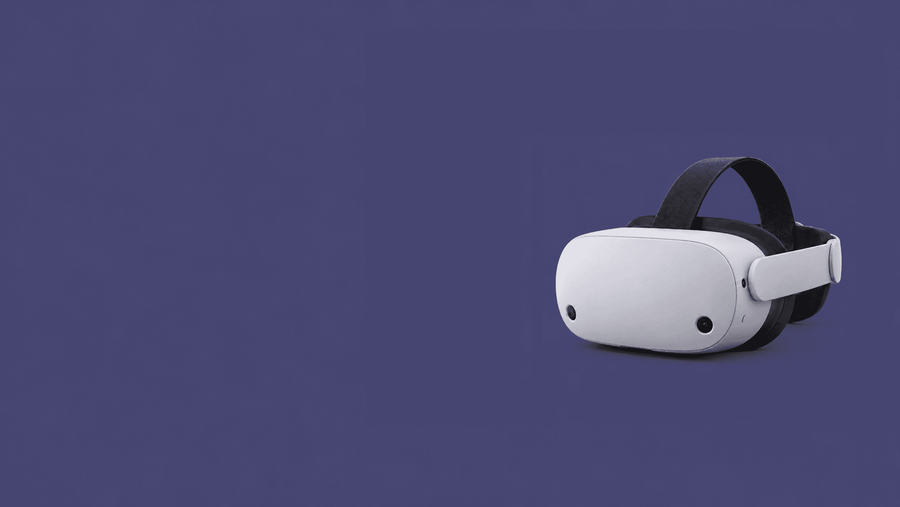
Virtual reality exposure therapy meets this need. Inserm indicates that some therapists use it for these gradual exposures[1], and a meta-analysis of 26 trials concludes that this approach reduces anxiety and phobias[8]. With C2Care, the practitioner recreates, for example, a metro, a plane, a crowd, a supermarket or a public speaking situation. They run the session in real time and adapt the progression to your reactions. C2Care is currently used by 700 trained practitioners and 350 institutions. It is not a treatment in itself, but a tool in the service of therapy.
Medication, when indicated
SSRI antidepressants are used as a long-term treatment. Anxiolytics act quickly but carry a risk of dependence: they are prescribed for a short period[1]. These choices are made with a doctor.
Daily life and breathing
Regular sleep and routine, a balanced diet and physical activity are the first-line approach, even if this is often not enough on its own[1]. Be careful too with alcohol or tobacco used to calm down: the risk of addiction is higher with an anxiety disorder[1]. Breathing work has a small to moderate effect on stress[6]: it is useful, but not a solution by itself.
Welcoming rather than fighting
Fighting every sensation can feed the fear of being afraid. Learning to let a surge of anxiety pass, without fleeing, comes up often in personal accounts. Approaches based on acceptance and mindfulness work on this idea.
Relapse: why it does not mean you have to start over
After a period when everything was going better, anxiety comes back during a bereavement, a separation, a job change or a lack of sleep. You then tell yourself: "I never really recovered." That is rarely true. What you have learned does not disappear.
Prepare for this moment with your therapist:
- identify your early warning signs: sleep, avoidance coming back, checking;
- keep a list of what has helped you;
- resume the exercises and situations early, without waiting for everything to settle down;
- get back in touch with your therapist or your doctor if it lasts.
When should you ask for help without waiting?
See someone if the anxiety persists, if you avoid more and more situations, if you sleep badly or if your mood drops. Inserm points out that anxiety and depression are often linked, and that having both increases the risk of chronicity[1]. Your family doctor can be a first point of contact. If you have suicidal thoughts, call or text 988[9] in the US (free, confidential, 24 hours a day, chat also available), or call Samaritans on 116 123[11] in the UK (free, 24 hours a day). If you are in another country, contact your local services.
What to remember about "I cured my anxiety"
A personal account can give you hope, but not a set of instructions. Getting out of anxiety most often means regaining your freedom of movement, without the emotion disappearing. About one adult in two reaches remission after CBT[2], and there is no universal timeframe. Be wary, then, of quick promises. The best-documented approaches involve therapy and the gradual return to avoided situations, with medication if your doctor considers it useful.
C2Care, a leader in immersive technologies for mental health
Create your free account to explore over 250 virtual reality exposure situations and subscribe directly online.
Frequently asked questions about recovering from anxiety
Can you recover completely from anxiety?
Anxiety, as an emotion, does not disappear, and that is normal. An anxiety disorder, however, can go into remission: this is the case for about one adult in two after CBT, on average[2]. Inserm indicates that treatment relieves most patients, but only rarely cures them[1].
How can you get out of anxiety for good?
No one can guarantee a permanent exit. You can, however, clearly reduce its place in your life, through therapy, the gradual return to avoided situations and a plan for difficult periods. Being wary of methods that promise otherwise is already good protection.
How long does it take to cure anxiety?
There is no standard duration. A surge of anxiety can ease in a few minutes, while lasting change is more a matter of months. How long the disorder has been present, its intensity and how regularly you work on it all affect this timeframe. Your therapist can give you an estimate.
What calms anxiety in the moment?
Slow breathing, focusing your attention on what is around you and staying in the situation instead of fleeing it can help. Slow breathing acts on heart rate variability from a single session[7]. These actions bring relief, but they do not resolve what sustains the anxiety.
What lies behind anxiety?
Vulnerability results from several factors: genetic, environmental, psychological or developmental, whose weight varies from person to person and across life stages[1]. Family history, a traumatic event or alcohol or drug use are part of them[1]. Anxiety also sometimes accompanies depression[1] or a health problem: a medical opinion helps take stock.
Can you get through it on your own?
Some people manage, especially when the difficulty stays mild. If the anxiety persists, worsens or makes you give up activities, a professional provides a framework and perspective that are hard to find alone. Your family doctor can refer you.
What should you do if anxiety comes back after improving?
This return does not mean you have to start over. Resume early what helped you, do not let avoidance settle back in, and contact your therapist or your doctor again if it lasts. Do not stop a treatment on your own either: the risk of relapse increases when an antidepressant is discontinued[5].
Can virtual reality help you get out of anxiety?
It can help as part of ongoing care, especially for avoided situations. A meta-analysis of 26 trials concludes that virtual reality exposure reduces anxiety and phobias[8]. The practitioner runs the session and adapts the progression. It is a tool, not a solution on its own.
References
- article
Anxiety disorders
Inserm
2021View - scientific-study
Remission in CBT for adult anxiety disorders: A meta-analysis
Clinical Psychology Review
2018View - scientific-study
Long-term Outcomes of Cognitive Behavioral Therapy for Anxiety-Related Disorders
JAMA Psychiatry
2019View - scientific-study
Factors predicting the clinical course of generalised anxiety disorder
The British Journal of Psychiatry
2000View - scientific-study
Risk of relapse after antidepressant discontinuation in anxiety disorders, obsessive-compulsive disorder, and post-traumatic stress disorder: systematic review and meta-analysis of relapse prevention trials
BMJ
2017View - scientific-study
Effect of breathwork on stress and mental health: A meta-analysis of randomised-controlled trials
Scientific Reports
2023View - scientific-study
Effects of voluntary slow breathing on heart rate and heart rate variability: A systematic review and a meta-analysis
Neuroscience & Biobehavioral Reviews
2022View - scientific-study
Innovative virtual reality exposure therapy for anxiety and posttraumatic stress disorder: a meta-analysis of randomised controlled trials
Journal of Global Health
2026View - article
Specific phobias
Manuel MSD, version grand public
2026View - website
988 Suicide & Crisis Lifeline
988lifeline.org
2026View - website
Samaritans
samaritans.org
2026View
Author
C2Care
Related articles

Natural stress remedies: what the science confirms
Herbs, breathing, habits: how well do natural remedies for stress really work? A factual overview of what studies say, including their limits and precautions.

Exam stress: how to manage it effectively
Nearly one in two medical students suffers from test anxiety. The causes, the symptoms to look out for and techniques to manage this stress better, without avoidance or routine medication.

Exposure therapy: how it works, effectiveness and protocols for anxiety disorders
Avoiding what frightens you provides short-term relief but worsens anxiety over time. Exposure therapy reverses this logic: gradual confrontation, habituation, documented results ranging from 50 to 80% depending on the disorder.
Managing an anxiety attack
As the situation overwhelms us, our anxiety takes an important place in our life, sometimes going so far as to cause a panic attack. This situation is particularly unpleasant for the person experiencing it, with significant physical and psychological symptoms. But this feeling is not irremediable, and there are some tips for managing your anxiety attack in the urgency of the situation. It is also possible to reduce the risk of panic attacks in the longer term by adopting certain strategies.

Artificial intelligence and mental health: what you need to know before using it
AI promises accessible psychological support around the clock. What do studies really say about chatbots, what are their limits, and how can you use them safely?

Hypnosis session: how does it work and what benefits can you expect?
Step-by-step walkthrough, sensations during and after, compared costs (practitioner, app, free): everything you need to know before your first hypnosis session.