
News & Advice
Welcome to our space dedicated to well-being news! Here, you will find informative articles, well-being tips and the latest scientific research to improve your daily life.
Our articles

Work on your self-confidence
We have all, at one time or another, doubted ourselves or our abilities to complete a task or overcome an obstacle. When this lack of self-confidence begins to become too difficult to overcome and when it handicaps us, limits us, when it builds barriers to our projects or our desires, it is fundamental to take charge of ourselves to improve it. Having confidence in yourself will allow you to achieve great things, and your personal pride will only grow.

Barlow's etiological model
Barlow's etiological model presents itself during the second group therapy session. This model explains the causes of phobias, anxiety, OCD, etc. According to this model, there may be a hereditary biological vulnerability, that is to say a sensitivity to anxiety which is transmitted by parents. This sensitivity has advantages, it allows us to be sensitive to the environment and the people around us. This can be an advantage in human care (nurses, caregivers, psychologists), with animals (veterinarians) but also at the artistic level. Artists are often anxious people but also sensitive to the environment and this sensitivity is very useful in the creative world.

Cognitive therapy: Self-observation
Cognitive therapy is used to help patients transform their way of thinking, to no longer interpret the situation in a dysfunctional way. For example, upon seeing a dog, the patient immediately thinks that the dog will bite him. The objective of these sessions is to change the way of thinking.

Gray's neurobiological model
Psychoeducation is done during the first group therapy session and consists of explaining the models of anxiety for patients: phobic, who have OCD, or who have generalized anxiety disorders. The models help explain the causes and mechanisms of anxiety, the goal is to help patients understand what is happening in their brains. Ignorance leads to fear. During group therapy, it is important to establish dialogue with patients and to establish an exchange; give patients the opportunity to participate as often as possible. In this article we will see Gray's neurobiological model and its implication in anxiety, phobias and OCD.

Jacobson's progressive muscle relaxation: method, steps and benefits
Jacobson's relaxation, or progressive muscle relaxation, alternates contraction and release of the muscles. This guide details the method, its four phases, what research says about it and its precautions, for practitioners and their patients.

National Hypersensitivity Day
This day is an opportunity to revalue hypersensitivity. Launched by Saverio Tomasella, it helps to better inform managers on the characteristics and modalities of hypersensitivity. They represent a quarter of the population, there are almost 10 million in France. We must therefore now take into account the specific problems of hypersensitive people and their place in society.

Post-traumatic stress
We hear a lot about post-traumatic stress (PTSD), but what is it really? Can you suffer from post-traumatic stress even if you haven't actually experienced a traumatic event? We will try to answer all these questions together.

Schultz relaxation
Today we are going to discuss the Schultz relaxation method. Schultz autogenic training is one of the three relaxation methods strongly recommended by Doctor Malbos and for your patients who are anxious, addicted or who have an eating disorder. This relaxation method will ultimately be able to be applied to most of your patients, but will be particularly effective on your patients who are chronically stressed, in other words, who have a generalized anxiety disorder, but also on those who have a panic disorder or who have agoraphobia. For the little historical point; This relaxation method was written by Doctor Schultz, psychiatrist from the German Göring Institute. He applied this relaxation method with veterans of the First World War.

assertiveness: how to receive criticism and react to mockery?
Sensitive to criticism and mockery, social phobic patients, like many others, can be easily hurt. However, there are concrete techniques for learning to receive criticism, formulate it, and react to mockery without suffering from it. Overview of Dr. Malbos' methods to pass on to your patients to strengthen their assertiveness.

Somatic origins of psychiatric illnesses
This article will be dedicated to evaluation and especially to the fact that you need to think carefully, when you have a patient who comes to you, about the organic origins of a psychiatric or psychological pathology. It is the idea that, behind a patient who is depressed, who is anxious, who has mood instability, there may be a somatic disorder, an organic disorder. That is to say a medical, medico-surgical pathology to be treated.

Beck's cognitive model
Beck's cognitive model is taught in the second session as part of the treatment of anxiety disorders (OCD, phobia). These sessions are often practiced in groups with the aim of involving patients. Our brain works like a computer processor, its main function is data processing: it constantly processes sensory information.
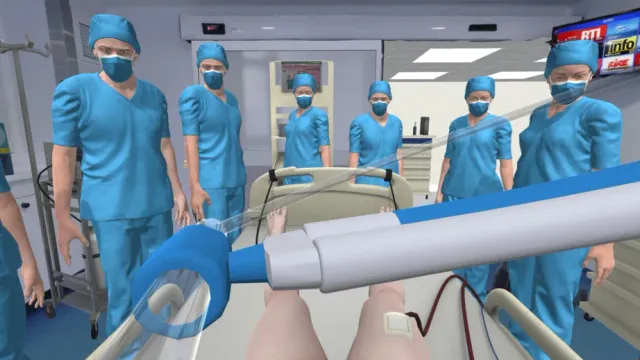
C2Care serving patients in intensive care
C2Care collaborated with the North Hospital of Marseille (AP-HM) as well as with Maryse Pour la Vie with the aim of preparing patients for their stay in the intensive care unit following a lung transplant operation. The very first patient to have contributed to this study was exposed before her operation. The results obtained are very positive.