
Virtual reality therapy: therapeutic immersion to treat phobias, pain and anxiety disorders
Virtual reality therapy immerses the patient in a 3D environment under the control of a professional. Phobias, pain, addictions: indications, effectiveness and limitations.
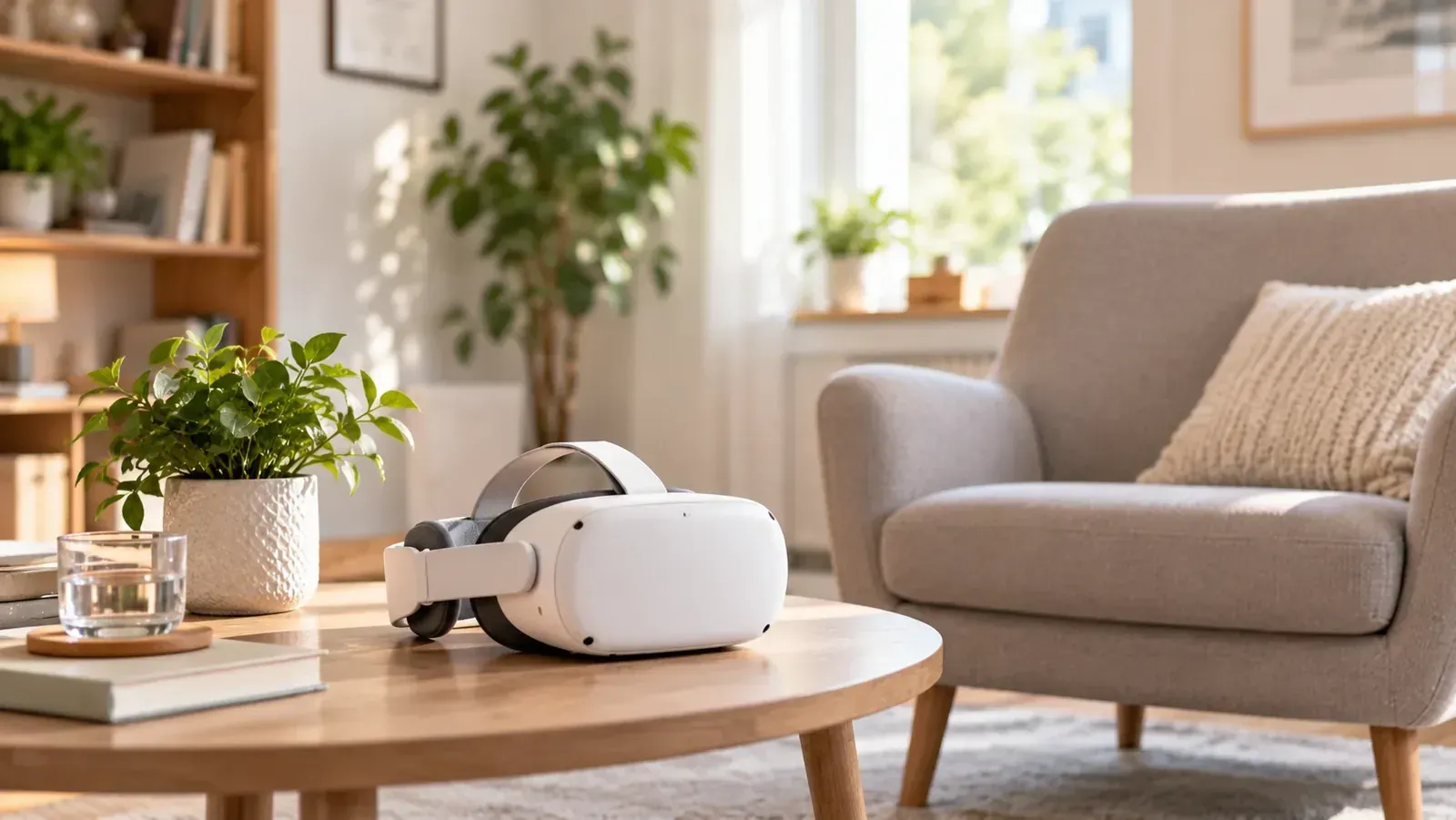
Key facts
- VRT combines a VR headset and validated clinical protocols to treat phobias, anxiety disorders, addictions and chronic pain, always under medical supervision
- Encouraging results in addiction treatment: fewer smoking relapses with virtual reality exposure than with CBT alone, in a trial by Dr Éric Malbos (AP-HM)
- Up to 60% reduction in perceived pain in patients with severe burns through the engagement of attention induced by virtual immersion
- To date, the C2Care solution is used in more than 350 institutions, including around thirty university hospitals, and 700 practitioners have been trained
- Recommended by the Haute Autorité de Santé (HAS) since 2022 for motor rehabilitation in the chronic phase of stroke, as a complement to another rehabilitation method
- Access by medical prescription, with sessions supervised by a healthcare professional; the C2Care platform allows practitioners to control exposure from a standard web browser
What is virtual reality therapy?
VRT is a validated therapeutic technique that immerses the patient in an interactive three-dimensional environment to treat psychological and physical disorders, always under direct medical supervision.
Principle and technical mechanism
The system relies on a head-mounted display (HMD, Head-Mounted Display) that generates a 360-degree virtual environment. Headphones enhance auditory immersion; depending on the indications, motion sensors or controllers complement the sensory experience. According to AP-HM, two characteristics define VRT: immersion, meaning the degree of sensory presence experienced by the patient, and interaction, meaning the ability of the patient and therapist to modify the environment in real time.
Virtual environments are designed according to precise scientific protocols, rather than for entertainment. Practitioners maintain a continuous visual view of what the patient is experiencing and can adjust the context, stimuli, frequency and intensity at any point during the session. C2Care thus offers more than 250 exposure scenarios that can be controlled from a single platform, without specialised computer equipment: a web browser on a PC, Mac or tablet is sufficient.
Neurobiological mechanisms: why immersion works
The effectiveness of VRT does not rely on a simple distraction effect. Several neuroscientific processes explain why virtual immersion produces measurable therapeutic effects.
The first mechanism is habituation: with repeated exposure to an anxiety-provoking stimulus in a safe setting, the nervous system gradually reduces its alert response. This phenomenon is accompanied by fear extinction, a process through which the amygdala, a brain region central to processing negative emotions, decreases its activity in response to stimuli previously perceived as threatening. Neuroplasticity then allows the brain to consolidate these new response patterns, making therapeutic gains lasting.
For pain management, the mechanism is different: immersion engages a large proportion of the brain's attentional resources, thereby diverting neural pain signals. Measurements of brain activity confirm reduced activation in areas associated with pain perception. Finally, operant conditioning and brain self-regulation form the basis of VR neurofeedback: when desirable brain activity is detected via EEG, it is reinforced by positive feedback, creating a neurological learning loop.
Clinical applications of virtual reality therapy
Three main areas of application are now scientifically validated: the treatment of anxiety disorders and phobias, pain management, and physical and motor rehabilitation. Addictions represent a fourth, rapidly developing area.
Treatment of phobias and anxiety disorders
Gradual in virtuo exposure is the most extensively documented application of virtual reality exposure therapy (VRET). The principle is to expose the patient to the feared situation gradually, in a controlled and reproducible environment, without the logistical constraints of real-life exposure.
The phobias treated with therapeutic virtual reality cover a broad spectrum:
- Fear of flying: progression from the boarding lounge to takeoff and turbulence, with the therapist controlling the intensity
- Agoraphobia: simulation of open spaces, crowds or public places with varying numbers of people
- Social phobia and public speaking: audience environments with increasing levels of attention
- Claustrophobia: enclosed spaces that become progressively smaller
- Acrophobia: cliffs and heights at varying levels
- Transport phobias: metro environments with different passenger levels, elevators
Compared with conventional in vivo exposure, VRET offers three structural advantages. Reproducibility: the same situation can be recreated identically for different patients or sessions, something no real-life exposure can guarantee. Controlled progression: the therapist adjusts the intensity of the stimuli in real time according to the reactions observed. Accessibility: there is no need to travel to an airport or a high location, which reduces costs and removes practical obstacles. According to Université de Genève, VRET is effective in treating anxiety disorders, phobias and addictions. C2Care covers this entire spectrum, with immersive environments that practitioners adapt in real time to each patient's needs.
Management of chronic and acute pain
A 60% reduction in pain among patients with severe burns[1]: this figure illustrates the extent of the effect that virtual immersion can have on pain perception. During treatment, which is often very intense, the VR headset engages the brain's attentional resources to the point of significantly reducing activity in brain regions associated with pain. Brain imaging measurements confirm this effect.
The mechanism is attentional engagement: the brain cannot process all the signals it receives simultaneously. By absorbing attention in an immersive environment, virtual reality reduces the processing devoted to pain signals. This approach also extends to chronic back pain, neck pain and postoperative pain.
Its decisive advantage over drug treatments is the absence of side effects and the absence of a risk of habituation. For patients with kinesiophobia (fear of movement associated with pain), virtual reality enables them to gradually overcome this apprehension in a safe setting, facilitating a return to physical activity.
Physical and motor rehabilitation
Post-stroke rehabilitation is the indication with the strongest institutional validation. Since 2022, HAS has recommended virtual reality as an adjunct to another motor rehabilitation method to improve upper- and lower-limb motor function in the chronic phase of stroke, meaning beyond six months, with an intermediate level of evidence (grade B)[3]. This official recognition contrasts with health authorities' usual caution regarding technological innovations.
In practice, virtual environments enable patients to exercise their upper limbs (grasping an object, opening a door, pouring themselves a drink) and lower limbs (balance, walking, coordination, climbing stairs). Motivation is the key factor: conventional rehabilitation exercises can seem repetitive. Transformed into interactions with an immersive environment, with clear goals and instant feedback, they generate substantially greater engagement. Patients progress more quickly, particularly because they invest more effort in the sessions.
For Parkinson's disease, studies show improvements in balance, walking, coordination and certain cognitive functions. Virtual reality also reduces the depressive symptoms frequently associated with this condition. For spinal rehabilitation, the observed results exceed those of conventional therapy alone, particularly through overcoming kinesiophobia in a setting perceived as safe.
Addictions and behavioral disorders
Fewer relapses with virtual reality exposure than with CBT alone: this was the result of a comparative trial conducted by Dr Éric Malbos (AP-HM) involving 100 former smokers[2]. It illustrates the potential of virtual reality in addiction treatment. The mechanism involves exposure to craving: the patient is immersed in situations that usually trigger the urge to use a substance (a coffee break with colleagues, a sunset on a terrace, waiting at a bus stop). The therapist measures the patient's response in real time and can adjust the environment according to the patient's specific characteristics.
For alcohol, AP-HP is currently conducting a randomized clinical trial evaluating the effectiveness of virtual reality exposure combined with CBT in reducing consumption and craving eight months after enrollment. Studies are also underway at AP-HM. For eating disorders, virtual environments enable work on cognitive distortions related to body image in a controlled setting. C2Care offers environments dedicated to addictive behaviors, and AP-HM is conducting specific clinical studies on smoking cessation using this technology.
Documented effectiveness and scientific validation
This is the point that most available content on this topic overlooks. Here are the consolidated findings by disorder, drawn from clinical studies and systematic reviews.
| Indication | Documented result | Source / reference |
|---|---|---|
| Smoking | Fewer relapses than with CBT alone, among 100 former smokers | Malbos et al., 2023 |
| Acute pain (severe burns) | Up to 60% reduction in perceived pain | Hospital studies, brain imaging |
| Post-stroke rehabilitation | Recommended as an adjunct for motor function in the chronic phase | HAS, 2022 recommendation (grade B) |
| Phobias and anxiety disorders | Validated effectiveness, established clinical protocols | Meta-analyses, randomized controlled trials |
| Parkinson's disease | Improvements in balance, walking, coordination and depressive symptoms | Hospital studies |
| Alcohol (craving) | Reduction in craving observed; effectiveness in reducing consumption under evaluation | Ongoing AP-HP clinical trial (156 patients) |
These findings are based on randomized controlled trials and meta-analyses, not merely clinical observations. C2Care is part of this research effort: with 10 years of expertise, the software provider participates in hospital-university research projects and has deployed its solutions in around thirty CHU in France. Scientific validation is a prerequisite, not an option.
What happens during a virtual reality therapy session?
A virtual reality exposure therapy (VRET) session does not begin with the headset. It begins with an initial assessment: the practitioner identifies the target disorders, defines the therapeutic goals and develops an exposure protocol tailored to the patient. This step is non-negotiable.
The session itself follows a gradual exposure approach. The patient wears the VR headset and is immersed in the environment selected by the therapist. Throughout the session, the practitioner retains a visual feed of what the patient is experiencing and can intervene at any time: change the intensity of the stimuli, adjust the context, slow down or speed up progression. Verbal support is maintained continuously.
Session frequency is determined on a case-by-case basis according to the disorder being treated and the patient's responses. Several sessions are generally needed to observe a significant change, with gradual consolidation over several weeks. Each session forms part of an overall protocol that may include other therapeutic modalities.
For practitioners, the C2Care platform allows the entire exposure process to be controlled from a web browser on a PC, Mac or tablet, without specialised computer equipment. The AI assistant Camille supports the patient during sessions, without judgement, to facilitate engagement in exposure.

C2Care, a leader in immersive technologies for mental health
Create your free account to explore more than 250 virtual reality exposure scenarios and subscribe directly online.
Benefits and limitations of virtual reality therapy
Like any therapeutic tool, VRET has documented benefits and real limitations that it would be counterproductive to downplay.
Therapeutic benefits
The advantages of therapeutic virtual reality span several complementary dimensions:
- Accessibility: no travel required, situations can be reproduced identically without logistical constraints
- Gradual progression: the therapist controls the intensity of stimuli in real time, according to the responses observed
- Safety and trust: the virtual environment is perceived as a protected space, which reduces resistance to treatment
- Increased motivation: immersive environments and instant feedback sustain patient engagement over time
- Personalisation: every parameter (context, stimuli, frequency, intensity) can be adjusted according to the patient's profile and goals
Another often underestimated benefit is patient–therapist collaboration. Sharing the same virtual experience, even through different interfaces, strengthens the therapeutic alliance and facilitates treatment development. As one psychiatrist who uses the solution puts it: "Ten years later, it is no longer a mere curiosity, but a genuine therapeutic tool that is stimulating, innovative and effective."
Limitations and precautions
VRET does not replace any existing treatment. It is always used in conjunction with medication and motivational interviewing, never on its own. This rule is non-negotiable: a healthcare professional offering virtual reality as the sole therapeutic modality would be operating outside the validated clinical framework.
The risk of dissociation between the virtual experience and reality is real: despite the increasing realism of the environments, some patients do not spontaneously transfer what they have learned in VR to real-life situations. Generalisation of progress is not automatic and requires additional therapeutic work.
Possible adverse effects include eye strain, migraines, nausea and dizziness in some patients. Heightened anxiety may occur during or after the session if exposure is too intense. These effects are generally temporary and manageable by adjusting the protocol, provided that medical support is maintained.
Accessibility and deployment in France
Access to virtual reality therapy requires a medical prescription. It is not a self-service process: a healthcare professional assesses the indication, defines the protocol and supervises the sessions.
Deployment in France has accelerated noticeably in recent years. Pioneering institutions include AP-HM in Marseille (hôpital de la Conception, Dr Éric Malbos), Pitié-Salpêtrière in Paris, CHU de Lyon, Bordeaux and La Réunion. To date, the C2Care solution alone equips more than 350 institutions, including around thirty CHU.
The question of accessibility for older adults is often raised. Studies show that VRET remains feasible even with limited sensory, cognitive or mobility capacities, provided that the protocol is adapted. Specific offerings are available for EHPAD, focusing on cognitive stimulation, neuropsychological assessment and relaxation.
Financially, coverage by Sécurité Sociale and supplementary health insurers varies according to the indication and the institution. For practitioners in private practice wishing to integrate VRET into their practice, C2Care offers a subscription at 99 €/month with no commitment or 799 €/year, with unlimited access to all environments. Healthcare institutions benefit from tailored offers. The solution is deployed in 25 countries, with 700 practitioners trained.
Future directions and technological innovations
VRET is far from having reached its limits. Several avenues of innovation are being explored.
Emerging applications include autism spectrum disorders (ASD), where virtual environments allow work on social interactions in a safe setting, PTSD in former military personnel or victims of terrorist attacks, and eating disorders, with work on cognitive distortions related to body image. Augmented reality opens up another avenue: instead of replacing an entire environment, it introduces synthetic elements into the indirect perception of the real environment, allowing exposure that is closer to the patient's everyday life.
The inclusion of avatars in virtual environments enriches protocols for social phobia and preparation for interactions. VR neurofeedback may represent the most promising development: by combining an EEG headset with an immersive environment, this closed-loop system adapts the virtual environment in real time according to the patient's brain activity, creating a personalised neurological training experience. Early research shows promising results for anxiety regulation, ADHD and neurorehabilitation, although large-scale evidence is still being gathered.
Key points about virtual reality therapy
Virtual reality therapy is a therapeutic tool with documented effectiveness for several disorders and conditions: phobias, anxiety, addictions, chronic and acute pain, and motor rehabilitation. For smoking cessation, a comparative trial even reports fewer relapses than with CBT alone.
Two points remain non-negotiable. VRET is an adjunct, never a standalone treatment. And it requires medical supervision at every stage: initial assessment, session management and protocol adjustment. In the hands of a trained professional, in an equipped institution, it is a technology that tangibly transforms care for disorders that are difficult to treat using conventional methods alone. Its role in healthcare institutions in France continues to grow.
C2Care, a leader in immersive technologies for mental health
Create your free account to explore more than 250 virtual reality exposure scenarios and subscribe directly online.
FAQ about virtual reality therapy
What are the possible side effects of virtual reality?
Eye strain, migraines, nausea and dizziness are the most common effects in some patients. Heightened anxiety may occur during or after a session if exposure is too intense. These effects are generally temporary and manageable by adjusting the protocol. Medical support is mandatory to prevent and treat these reactions.
What effects does virtual reality have on the brain?
Virtual immersion engages attentional resources, diverting attention from pain signals. It reduces activity in the amygdala (fear processing), promotes gradual habituation to anxiety-provoking stimuli and stimulates neuroplasticity to consolidate fear extinction. Immersive environments reinforce learning through multisensory stimulation. These effects can be measured using EEG and brain imaging.
Does virtual reality therapy replace other psychotherapies?
No. Virtual reality therapy is a complementary tool used alongside CBT, medication and motivational interviewing. It enriches and individualizes treatment; it does not replace it. It is always supervised by a healthcare professional who adapts the overall protocol to the patient's needs and responses.
How many sessions are needed to see results?
This depends on the condition being treated and the patient's profile. Treatment generally involves several sessions of gradual exposure, at a frequency determined individually by the therapist. Effects may be observable from the first few sessions, with consolidation over several weeks. The protocol is personalized according to the patient's responses and therapeutic goals.
References
- article
Virtual reality therapy in hospitals: when technology provides treatment (pain management, rehabilitation, phobias)
Alan
2026View - scientific-study
Virtual reality cue exposure therapy for tobacco relapse prevention: a comparative study with standard intervention
Psychological Medicine
2023View - Report
Rehabilitation in the chronic phase of stroke in adults: relevance, indications and methods
Haute Autorité de Santé
2022View
Author
C2Care
Related articles
Virtual reality therapy in hospitals: applications and clinical outcomes
Pain, pediatrics, rehabilitation, phobias: virtual reality therapy is becoming established in hospitals. Applications, clinical outcomes, limitations and care.
Virtual reality in healthcare: therapeutic applications, measured benefits and real risks
Therapeutic virtual reality has moved from the laboratory to the treatment room. Pain management, phobia treatment, post-stroke rehabilitation: an overview of documented benefits and risks to be aware of.
Virtual reality in healthcare: therapeutic applications and clinical outcomes in 2026
Virtual reality is transforming medicine: pain management, phobia treatment, post-stroke rehabilitation. Discover clinically validated applications and quantified outcomes in French and international hospitals.
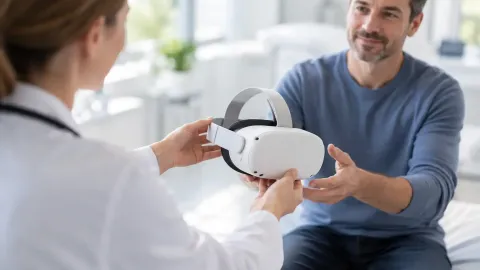
Medical virtual reality: how technology is transforming healthcare
Medical virtual reality is a scientifically validated therapeutic tool already deployed in French CHU. Pain management, post-stroke rehabilitation, phobia treatment: discover its practical applications.
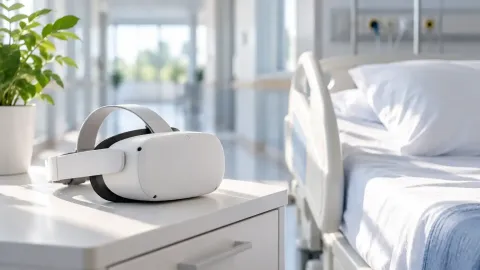
Virtual reality in hospitals: therapeutic applications and outlook for 2026
Pain management, post-stroke rehabilitation, cybertherapies: virtual reality is establishing itself in French hospitals as a scientifically validated therapeutic tool, with measurable outcomes and growing adoption across healthcare facilities.

DTx (digital therapeutics): definition, regulation in France and uses
DTx, digital therapy, digital medical device: behind these terms lies the same requirement for evidence. Definition, differences from a health app, and reimbursement in France and Germany.