
Virtual reality therapy in hospitals: applications and clinical outcomes
Pain, pediatrics, rehabilitation, phobias: virtual reality therapy is becoming established in hospitals. Applications, clinical outcomes, limitations and care.
Key facts
- Adoption in French university hospitals: Pitié-Salpêtrière, hôpital de la Conception in Marseille, CHU de Lyon, with around thirty university hospitals equipped with the C2Care solution alone to date.
- HAS 2022 recommendation: virtual reality as an adjunct to another motor rehabilitation method in the chronic phase of stroke.
- Reduction in perceived pain by up to 60% in patients with severe burns during care.
- In addiction treatment, fewer smoking relapses with virtual reality exposure than with CBT alone, in a trial by Dr Malbos in Marseille.
- Access by medical prescription only, always under the supervision of a healthcare professional.
How does virtual reality therapy work in a hospital setting?
Virtual reality therapy relies on a specific technical setup, always integrated into a medical protocol and used under the supervision of a qualified healthcare professional.
The technical setup and therapeutic environment
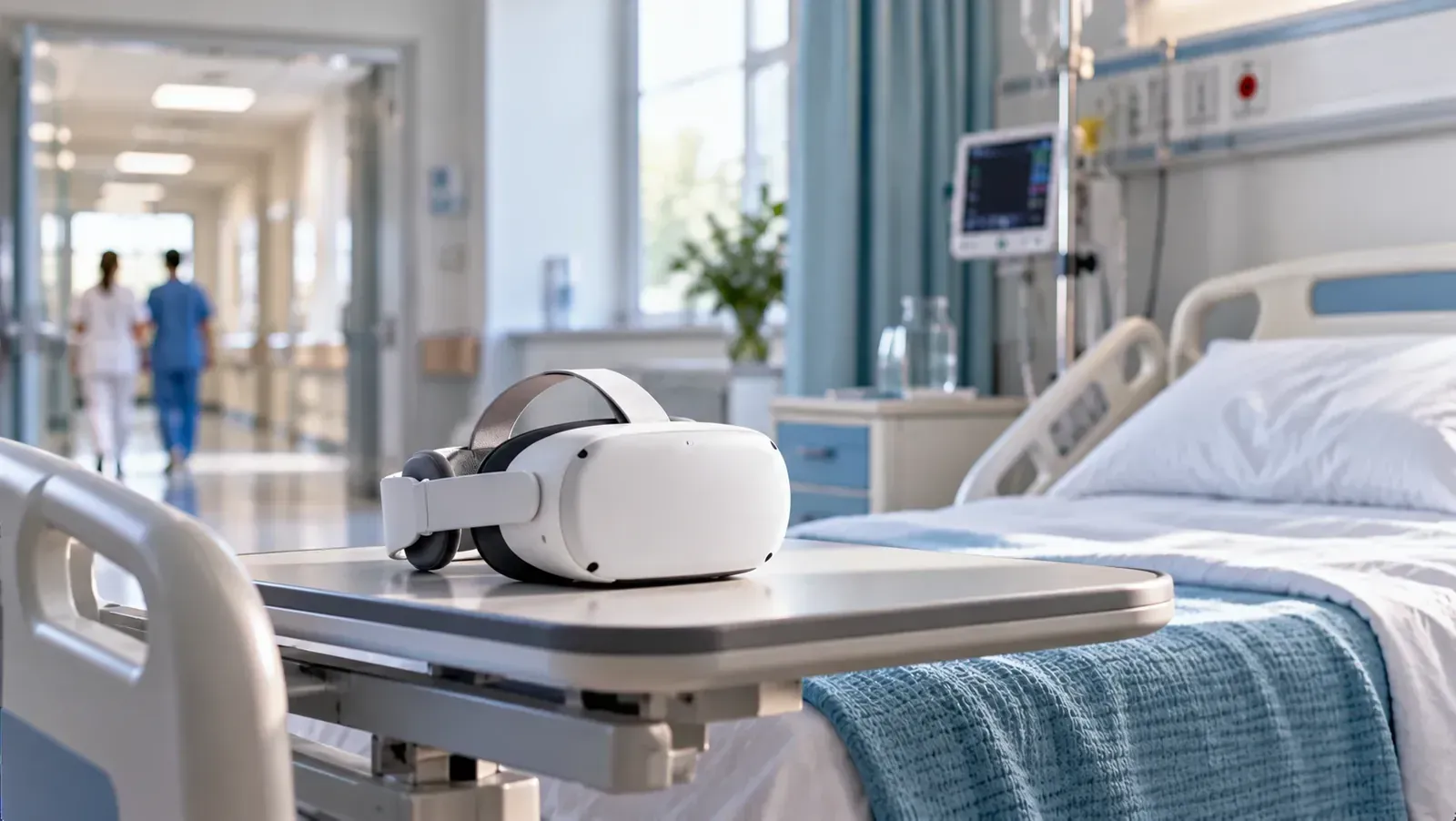
The patient wears a virtual reality headset that provides access to a 360-degree 3D environment. Headphones play appropriate sounds to enhance immersion, while motion sensors and controllers allow interaction with the virtual environment according to the therapeutic goals. This equipment is fundamentally different from consumer headsets: the environments are designed according to scientifically validated medical protocols, not for entertainment. Throughout the session, the healthcare professional supports the patient and adjusts the experience in real time, modulating the intensity of the stimuli according to the observed response.
Mechanisms of action on the brain
Virtual immersion acts on the brain through two main mechanisms. The first is attentional diversion: by engaging a large share of the patient's cognitive resources, the virtual environment reduces the brain's capacity to process pain or anxiety signals. Functional imaging measurements show reduced brain activity in areas associated with pain perception[1]. The second mechanism is gradual habituation, a central principle of cognitive behavioral therapies: with repeated, controlled exposure to an anxiety-provoking stimulus, the brain gradually changes its response. Activation of the amygdala and anterior cingulate cortex decreases over the course of the sessions, as confirmed by functional MRI measurements.
Pain management and acute care
Pain management is the most extensively documented application of virtual reality in hospital settings. The results are particularly striking in patients with severe burns: during care that is often very painful, immersion in a virtual environment can reduce perceived pain by up to 60 %[1]. The explanation is neurobiological. The virtual environment engages a major share of the brain's attentional resources, leaving less capacity available to process nociceptive signals. This approach also extends to chronic back pain, neck pain and postoperative pain.
The key advantage of this method is that it is non-pharmacological. It limits the side effects and risks of habituation associated with conventional analgesics, making it a valuable adjunct in complex care pathways. Professional solutions controlled in real time by the healthcare provider allow the intensity of immersion to be adjusted according to the patient's response from one session to the next, providing a reproducible framework that can be adapted to each clinical situation.
Virtual reality in pediatrics: reducing stress and pain in children
In pediatrics, virtual reality turns particularly distressing moments into manageable experiences. As early as 2018, Centre Antoine Lacassagne launched an initial evaluation of virtual reality headsets for children undergoing radiotherapy. The hypothesis was that immersion would reduce stress related to positioning under the treatment machine, an iterative process that requires prolonged immobility. The initial results were presented to Groupe Français des Radiothérapeutes Pédiatrique, focusing on the hypothesis of a substantial reduction in children's stress during positioning[2], paving the way for nationwide expansion of the technique.
Applications extend beyond radiotherapy. At Hôpitaux Universitaires de Genève (HUG), research has documented a reduction in children's anxiety before care. For MRI examinations, the VR headset offers a direct clinical and economic advantage: it often makes it possible to avoid general anesthesia, thereby reducing the associated risks and care costs. The same principle applies to dental care and emergency department visits, where immersion in a playful, reassuring environment reduces the need for sedation.
Neurological and motor rehabilitation after stroke
Since 2022, Haute Autorité de Santé has recommended virtual reality as an adjunct to another motor rehabilitation method to improve motor function in the chronic phase of stroke, beyond six months, with an intermediate level of evidence (grade B)[4]. This official endorsement also covers patients with Parkinson's disease and those with lasting effects of traumatic brain injury.
Recovery of motor function
Virtual environments allow patients to work on motor recovery in a structured and motivating way. For the upper limbs, exercises reproduce everyday movements: grasping an object, opening a door, pouring a drink. For the lower limbs, sessions improve balance, walking and coordination by simulating real-life situations such as crossing a street or climbing stairs. Gamification of these exercises radically changes patient engagement. Where conventional rehabilitation may seem repetitive, virtual reality introduces clear goals and immediate feedback that sustain motivation throughout treatment.
Clinical outcomes and official recommendations
Beyond post-stroke rehabilitation, virtual reality demonstrates effectiveness in patients with Parkinson's disease: improved balance, walking and coordination, and reduced depressive symptoms frequently associated with this condition. Recommended protocols run over several weeks, with sessions scheduled on a weekly basis. The practitioner adjusts treatment duration and intensity according to the observed clinical response, ensuring progression tailored to each patient.

C2Care, a leader in immersive technologies for mental health
Create your free account to explore more than 250 virtual reality exposure scenarios and subscribe directly online.
Treatment of anxiety disorders and phobias through virtual exposure
Virtual Reality Exposure Therapy (VRET) is based on a simple principle: gradually confronting the patient with the situation that causes their fear, in an environment fully controlled by the therapist. This graded exposure reproduces the mechanisms of conventional CBT, with a decisive advantage: situations that are difficult to recreate in real life become accessible on demand, without logistical constraints.
The phobias treated with VRET in hospitals cover a broad spectrum:
- Fear of flying: gradual exposure to the stages of a flight, from security screening to turbulence.
- Agoraphobia: simulation of open spaces, crowds and public places that are usually avoided.
- Claustrophobia: graded exposure to confined spaces.
- Acrophobia (fear of heights): exposure to environments at controlled heights.
- Public speaking: simulation of audiences of varying sizes and levels of responsiveness.
C2Care offers more than 250 exposure situations controlled by the practitioner, covering all these indications from a single platform. This broad coverage allows each session to be tailored to the patient's specific profile, without depending on external constraints. The effectiveness of VRET for specific phobias is documented in several studies, with progression that is easy to grade.
Addictions and withdrawal: tobacco, alcohol, substances
In addiction treatment, virtual reality is used to trigger craving in a controlled way. The patient is immersed in situations that make them want to use a substance: a coffee break with colleagues, a sunset on a terrace, waiting at a bus stop. The physician measures the response in real time and adjusts the environment to the patient's specific characteristics, particularly when the addiction is associated with post-traumatic stress disorder.
The results obtained by Dr Éric Malbos, a psychiatrist at hôpital de la Conception in Marseille, are telling: in a comparative trial involving 100 former smokers, there were fewer relapses with virtual reality exposure than with CBT alone[3]. VRET is not a standalone treatment: it is used alongside medication and motivational interviewing. This combination makes it possible to address both addictive behaviour and the emotional triggers that sustain it.
Surgical preparation and management of preoperative stress
Before a procedure, the acute stress experienced by patients presents a real clinical challenge. With pharmacological and human resources often limited, virtual reality is emerging as a relevant non-drug alternative. Immersion in a calming environment (beach, forest, mountains) measurably reduces preoperative anxiety: objective parameters such as cortisol levels and postoperative analgesic use are used in studies to quantify the effect.
Prospective randomised studies conducted in neurosurgical patients have yielded initial positive results, with effects observed in the short and medium term. Combining virtual reality with hypnosis enhances immersion and strengthens attentional diversion during stressful stages of the surgical care pathway. Virtual reality appears to have a promising role in surgery, benefiting both patients and care teams.
Which French hospitals offer this therapy?
Therapeutic virtual reality is now being deployed in healthcare facilities across France. For example, the C2Care solution currently equips around thirty university hospitals and more than 350 facilities. Here are the main facilities identified by region:
- Île-de-France: hôpital de la Pitié-Salpêtrière (psychiatry, rehabilitation), hôpital Cochin (Paris).
- Provence-Alpes-Côte d'Azur: hôpital de la Conception in Marseille (psychiatry, addiction medicine), Centre Antoine Lacassagne (paediatrics, radiotherapy).
- Auvergne-Rhône-Alpes: CHU de Lyon (rehabilitation, pain).
- Nouvelle-Aquitaine: CHU de Bordeaux.
- Overseas territories: CHU de La Réunion.
The departments involved vary by facility: psychiatry, neurological rehabilitation, paediatrics, pain management units. This gradual deployment reflects structured institutional adoption, rather than a marginal phenomenon.
C2Care, a leader in immersive technologies for mental health
Create your free account to explore more than 250 virtual reality exposure scenarios and subscribe directly online.
Limitations, contraindications and adverse effects
Therapeutic virtual reality has known and documented limitations. Physically, the most common adverse effects are eye strain, nausea, migraines and dizziness. These symptoms, collectively known as cybersickness, are generally temporary but require monitoring during the session.
Psychologically, exposure to a stressful environment can cause heightened anxiety during or after the session. A dissociation between what the patient experiences in VR and what they feel in reality is also possible, which may limit the transfer of gains. Absolute contraindications include photosensitive epilepsy and severe vestibular disorders. Virtual reality never replaces the healthcare professional. It is always used as an adjunct to conventional treatment, under direct medical supervision, never independently.
Access and coverage: prescription and cost
Access to virtual reality therapy in hospital always requires a medical prescription. Without a prescription, no care can be provided in the hospital setting. Financial coverage depends on the facility, the indication and the patient's supplementary health insurance.
The cost of sessions and the duration of treatment depend on the condition being treated and the protocol chosen by the practitioner. Before starting treatment, check with your supplementary health insurer about the coverage conditions that apply to your situation.
Key points about virtual reality therapy in hospital
Virtual reality therapy has become established in many French hospitals, from psychiatric departments to rehabilitation. Its effectiveness is documented for acute and chronic pain, phobias, addictions and surgical preparation. It is always used under medical supervision, as an adjunct to conventional treatment, never alone. Its limitations are known and managed. Access requires a prescription, with coverage varying according to the indication and supplementary health insurance.
FAQ about virtual reality therapy in hospital
What is the most effective therapy for phobias?
In addiction medicine, a trial by Dr Malbos shows fewer smoking relapses with VRET than with CBT alone. For specific phobias (flying, heights), gradual exposure in virtual reality allows controlled habituation, often faster than in real-life conditions. Effectiveness still varies according to the phobia and the patient's profile.
What effects does virtual reality have on the brain?
Virtual reality produces an attentional diversion that reduces activity in brain regions associated with pain, gradual habituation through repeated exposure, and a change in the response to anxiety-provoking stimuli. Functional MRI measurements confirm decreased activation of the amygdala and anterior cingulate cortex over the course of the sessions.
How many sessions are needed for virtual reality treatment?
The number of sessions varies according to the condition: 8 to 12 sessions for simple phobias, 15 to 20 for post-traumatic stress disorder, and 6 to 10 for smoking cessation. Weekly sessions are recommended. A noticeable improvement generally appears within 2 to 3 weeks. The practitioner adjusts the protocol according to the patient's response.
How is virtual reality therapy covered?
It always requires a medical prescription. Coverage conditions vary according to the facility, the indication and your supplementary health insurance: contact the facility and your supplementary health insurer before starting treatment.
References
- article
Virtual reality therapy in hospitals: when technology provides care
Alan
2026View - article
Virtual reality for children undergoing radiotherapy
Centre Antoine Lacassagne
2025View - scientific-study
Virtual reality cue exposure therapy for tobacco relapse prevention: a comparative study with standard intervention
Psychological Medicine
2023View - Report
Rehabilitation in the chronic phase of stroke in adults: relevance, indications and methods
Haute Autorité de Santé
2022View
Author
C2Care
Related articles
Virtual reality in healthcare: therapeutic applications, measured benefits and real risks
Therapeutic virtual reality has moved from the laboratory to the treatment room. Pain management, phobia treatment, post-stroke rehabilitation: an overview of documented benefits and risks to be aware of.
Virtual reality in hospitals: therapeutic applications and outlook for 2026
Pain management, post-stroke rehabilitation, cybertherapies: virtual reality is establishing itself in French hospitals as a scientifically validated therapeutic tool, with measurable outcomes and growing adoption across healthcare facilities.
Virtual reality in healthcare: therapeutic applications and clinical outcomes in 2026
Virtual reality is transforming medicine: pain management, phobia treatment, post-stroke rehabilitation. Discover clinically validated applications and quantified outcomes in French and international hospitals.
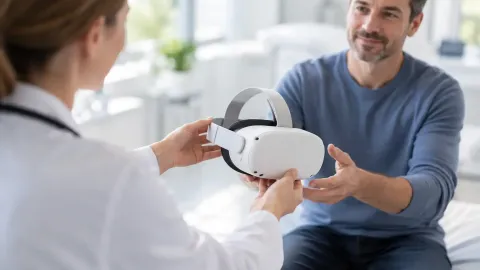
Medical virtual reality: how technology is transforming healthcare
Medical virtual reality is a scientifically validated therapeutic tool already deployed in French CHU. Pain management, post-stroke rehabilitation, phobia treatment: discover its practical applications.
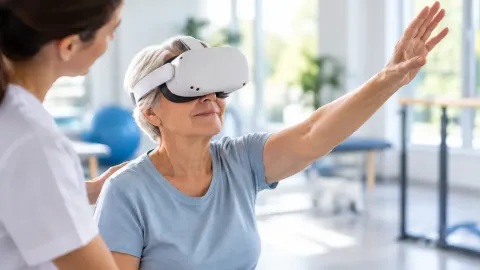
Virtual reality headsets in rehabilitation: applications, effectiveness and protocols in 2026
Virtual reality headsets are becoming established as a validated clinical tool in rehabilitation centres: motor recovery after stroke, neurodegenerative diseases, pain management. Protocols, effectiveness and equipment comparison in 2026.
Virtual reality therapy to break the isolation of seniors – Clinical study of CHU in Nice
C2Care collaborated with CHU in Nice, as part of the “Bien Aging” project, on a clinical study integrating virtual reality with EHPAD residents. By relying on reminiscence therapy and personalized immersive content, the objective is to stimulate the autobiographical memory of seniors, improve their mood and break the isolation, particularly accentuated in people with mild to moderate cognitive disorders.